About Jason
I have spent my career helping people make sense of what technology makes possible and what organizations must change to make it matter.
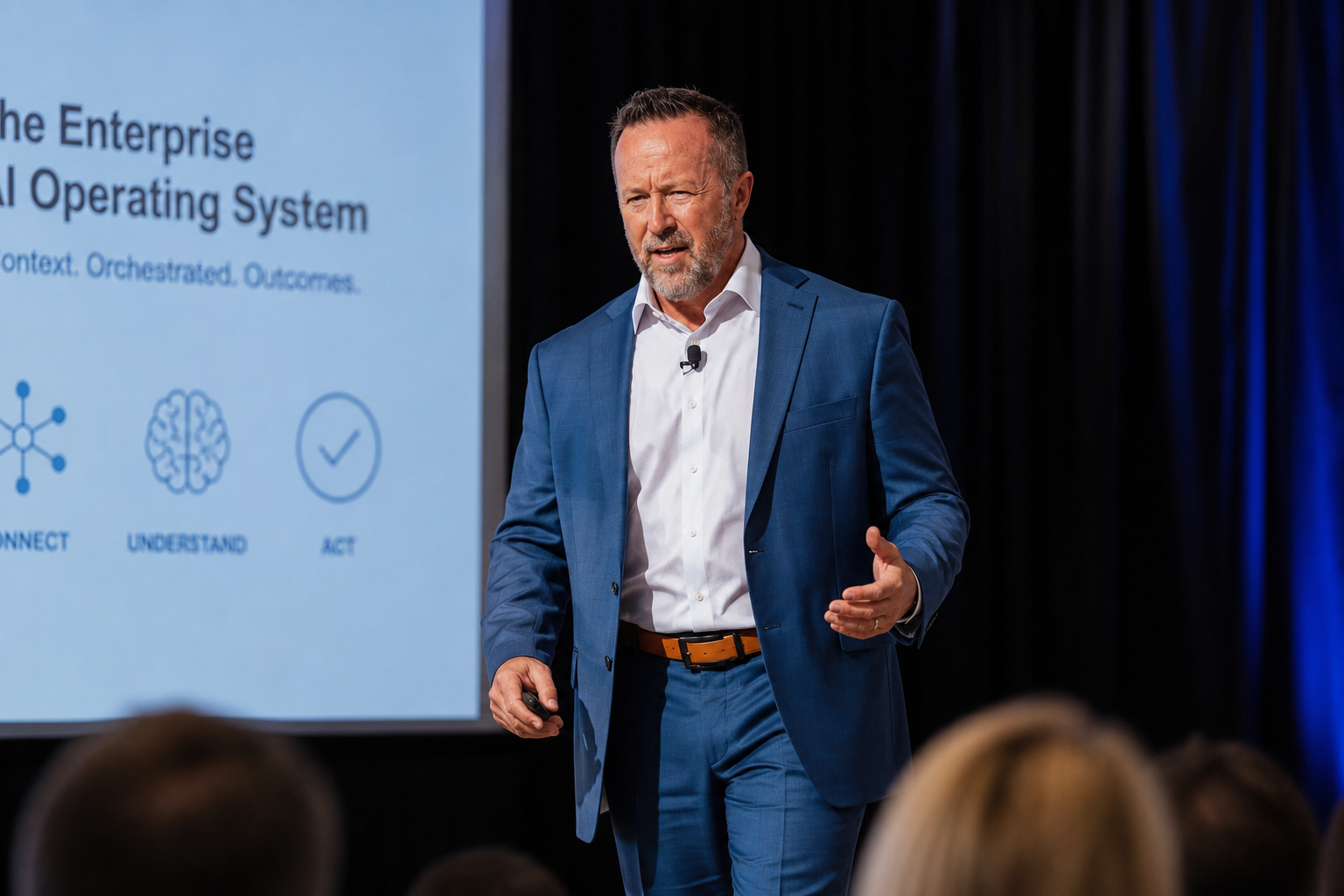
For more than two decades I have worked across major waves of enterprise technology, including infrastructure, cloud computing, mobility, identity security, data platforms, SaaS, and artificial intelligence.
I have had the opportunity to build and lead enterprise businesses at companies including DevRev, SailPoint, Databricks, Okta, VMware, xMatters, and Dell. Along the way I have worked with Fortune 1000 executives, built and developed sales teams, helped create new markets, and participated in complex transformation initiatives across some of the largest organizations in the world.
My career has given me a close view of what happens when ambitious technology meets organizational reality.
New technology may create the opportunity, but it does not create alignment.
It does not resolve competing priorities.
It does not establish trust.
It does not build the operating cadence required to turn an idea into a repeatable capability.
People do that. Leaders do that. Well-designed organizational systems make it possible at scale.
That is why my interests extend beyond what technology can do. I am equally interested in how people make decisions, how leaders develop teams, how work moves across organizational boundaries, and how companies turn change into durable progress.
Today, much of my attention is focused on enterprise AI.
I believe AI will reshape how organizations understand customers, coordinate work, develop products, and make decisions. But the winners will not necessarily be the companies that deploy the most models or launch the most pilots. They will be the companies that connect AI to trusted context, real workflows, clear accountability, and meaningful business outcomes.
That is the intersection I find most interesting: technology, leadership, and execution.
Leadership is an operating system
I do not believe leadership is primarily about charisma, authority, or having the answer first.
Leadership is the environment a person creates around the work.
It is the clarity people receive.
The standards they understand.
The questions they are encouraged to ask.
The coaching they can rely on.
The accountability they know is real.
The trust they feel when something goes wrong.
Strong leaders build systems that allow people to think, decide, learn, and execute without waiting for the leader to personally direct every move. That requires discipline, but it also requires empathy.
People should know what is expected of them. They should also know that their development matters.
The goal is not to create dependence on the leader. It is to build an organization that becomes stronger because leadership exists throughout it.
Different technologies. A consistent lesson.
I have worked through enough technology cycles to know that each one initially feels unprecedented.
The terminology changes.
The architecture changes.
The companies change.
Human behavior changes more slowly.
Organizations still struggle with silos, competing incentives, incomplete information, unclear ownership, and the distance between a strategic idea and day-to-day execution.
That does not make technology less important. It makes leadership more important.
The organizations that create lasting value are usually the ones that approach transformation as both a technical challenge and an operating challenge. They rethink workflows, decision rights, incentives, roles, customer experiences, and how knowledge moves through the business.
AI makes that lesson even more important.
More than work
Work has been a meaningful part of my life, but it is not the whole of it.
I am a husband, father, athlete, coach, traveler, and lifelong learner. I value hard work, directness, humor, resilience, and people who care enough to tell the truth. I enjoy difficult physical challenges, long conversations, new places, and the kind of experiences that reset your perspective.
I have also spent time supporting youth athletics and programs serving children with special needs. Those experiences have reinforced something I have seen throughout my career: people grow when expectations are paired with encouragement, patience, and someone who genuinely believes in them.
Some of the most important lessons about leadership never came from a business book or executive meeting. They came from being responsible for other people.
I am still learning.
This site is not a collection of final answers.
It is a record of ideas I am working through, lessons I have learned, and questions I believe deserve more thoughtful discussion.
Thanks for taking the time to explore them.